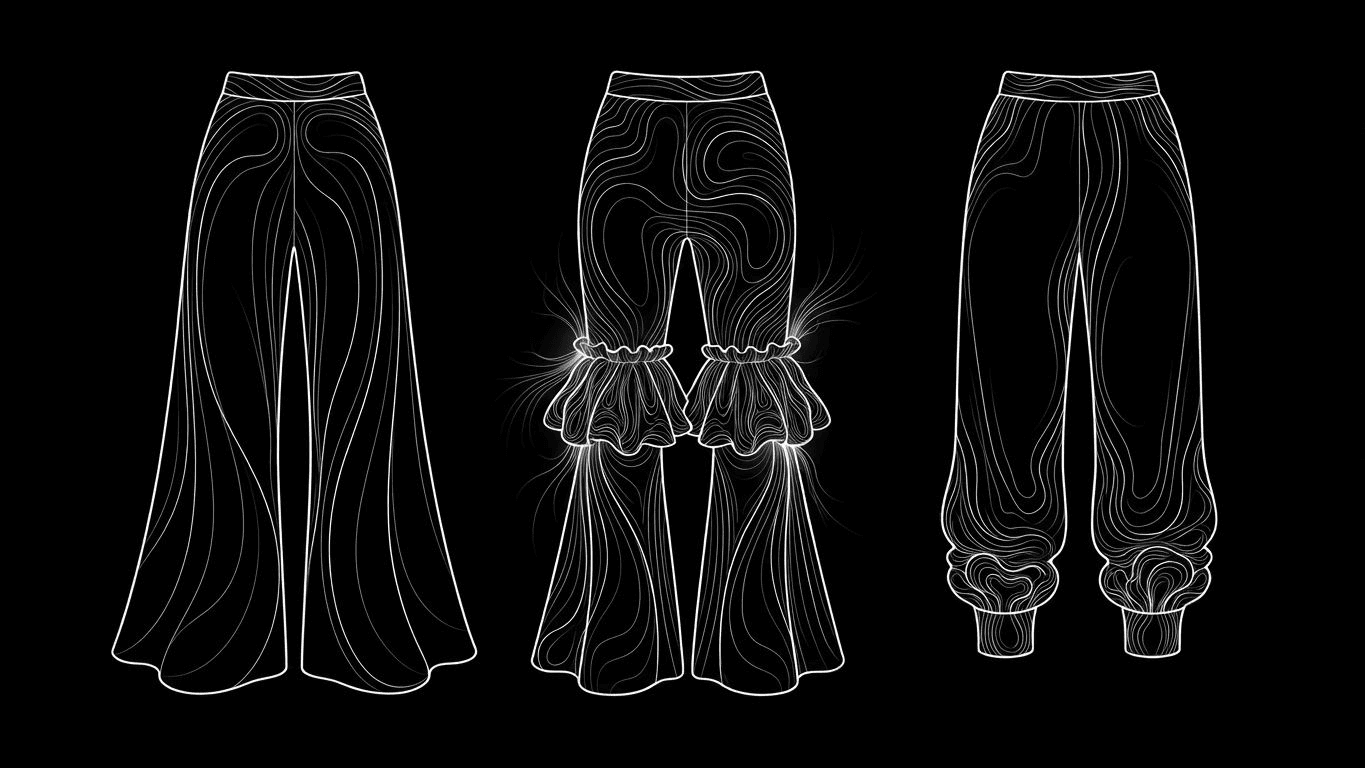
Sharara vs Gharara vs Farshi — what's the difference? (Note: Youthnic's Farshi Sets are a modern, ankle-length gathered-hem reinterpretation — not floor-trailing. The article must distinguish traditional farshi from Youthnic's contemporary version which is fully walkable, cotton/rayon, casual-festive, priced under INR 999.)
Sharara vs Gharara vs Farshi: What's the Difference (and Which One Actually Works for You)?
These three silhouettes get mixed up constantly, and it's not hard to see why. All three involve wide, flowy bottoms paired with a kurta or top. But the differences in cut, construction, and occasion are significant enough that wearing the wrong one to the wrong event feels off. Here's exactly what sets each apart, including why Youthnic's Farshi Sets are a different animal entirely from the traditional version you'll find in bridal catalogs.
Key Takeaways
- Sharara flares from the waist all the way down, no seam break at the knee
- Gharara is fitted from waist to knee, then dramatically flares out from a knee-band
- Traditional farshi trails on the floor; Youthnic's version is ankle-length and fully walkable
- Gharara uses significantly more fabric than sharara, making it heavier and more structured
- Youthnic's Farshi Sets in cotton/rayon are priced under INR 999 and built for casual-festive wear, not ceremonies
How Does a Sharara Actually Cut?
A sharara is fully flared from the waist to the hem, with zero structural joint at the knees, making it closer to a wide palazzo or skirt in movement. According to Ellen School, a sharara has no break point, the fabric flows continuously outward from the hip, which gives it that swishy, skirt-like quality when you walk.
This is exactly why shararas feel lighter and less restrictive. The silhouette reads as festive without being heavy or ceremony-specific. Pair one with a short or mid-length kurta and you land somewhere between casual-chic and occasion-ready. Shararas work particularly well in georgette and rayon because the drape amplifies the natural flare without adding weight.
For reference: the Youthnic Grey Silk Blend Embroidered Kurta Sharara With Dupatta Set at INR 1,499 is a good example of what a full sharara set looks like styled for a festive occasion without tipping into bridal territory.
How Is Gharara Different from Sharara?
Gharara is the most structurally distinct of the three. In a classic gharara, the pant is fitted up to roughly 50% of its length (till the knees), with the remaining lower half flaring out from a joint or band at the knee, according to Ellen School. That knee seam is the defining feature. You'll see a visible gathered band or ruffle at the knee where the fitted upper leg meets the voluminous lower leg.
The volume in a gharara is not subtle. Traditional gharara pants can use around 12 meters of fabric, giving each leg a very voluminous flare below the knee. That's why traditional gharara sets feel substantial and ceremonial. They're not the silhouette you reach for when you want to be comfortable at a day function.
Gharara and sharara both originate in Mughal-era Awadh and Lucknow, with Lucknow historically cited as the origin of gharara, according to Zahrat. The Nawabi courts of that region developed both silhouettes as formal court wear, which explains why they've retained their association with ceremony and occasion dressing.
The practical difference: if you see a seam or ruffle at the knee, it's a gharara. If the flare starts at the hip and runs unbroken to the hem, it's a sharara.
  SHARARA                    GHARARA
 ┌───────┐                  ┌───────┐
 │ Waist │                  │ Waist │
 └───┬───┘                  └───┬───┘
     │                          │
 ┌───┴───┐                  ┌───┴───┐
 │       │                  │Fitted │
 │ Flare │                  │to Knee│
 │       │                  └───┬───┘
 │       │                 -#[KNEE]#-
 │       │                  ┌───┴───┐
 └───┬───┘                  │ Flare │
 │ Ankle │                  └───┬───┘
 └───────┘                  │ Ankle │
                            └───────┘
Sharara vs Gharara: Identifying the Flare Point.
What Is Traditional Farshi, and Why Is It Different?
Traditional farshi is the most extreme silhouette of the three. The name itself comes from "farsh," meaning floor, because the hem is designed to trail behind the wearer like a train. Traditional farshi is made for formal and bridal occasions, and the floor-trailing hem is intentional. It's not a design quirk; it's the defining feature.
This is why traditional farshi is almost never worn casually. The trailing hem requires slow, deliberate movement. It's worn at weddings, formal receptions, or photoshoots where the visual drama of the trailing fabric is the point. In terms of fabric, traditional farshi typically uses heavy materials like silk, brocade, or velvet, reinforcing its ceremonial positioning.
The silhouette itself, below the knee, resembles sharara in that it has continuous flare without a knee-band. But the scale is different. Where a sharara hem sits at ankle level or just above, traditional farshi extends well past the foot.
What Makes Youthnic's Farshi Sets a Different Category?
This is where the distinction matters most for everyday buying decisions. Youthnic's Farshi Sets are a contemporary reinterpretation, not a traditional farshi. According to Ellen School, modern ankle-length walkable versions like these represent a complete shift toward casual-festive, everyday wear compared with the original ceremonial farshi described in historical sources.
Youthnic's version keeps the gathered-hem aesthetic (the visual fullness and flare at the bottom) but stops at ankle length. There's no trailing fabric. You can walk, dance, climb stairs, and move freely. The materials are cotton and rayon, not silk or brocade, which means they're breathable and appropriate for daytime events, mehndi functions, casual Diwali gatherings, or a festive day at the office.
Priced under INR 999, these sets are designed for the person who wants the visual impact of a flared ethnic silhouette without the formality or the mobility constraints of a true ceremonial farshi. It's the same energy as a sharara in terms of wearability, but with a gathered-hem finish at the bottom that gives it a slightly different visual character.
The short version: if someone sells you a "farshi set" that trails on the floor, that's traditional farshi. If it's ankle-length, cotton or rayon, and priced under INR 999, it's a modern reinterpretation built for real-world wear.
  TRADITIONAL FARSHI         YOUTHNIC FARSHI
 ┌─────────────┐            ┌─────────────┐
 │    Waist    │            │    Waist    │
 └──────┬──────┘            └──────┬──────┘
        │                          │
 ┌──────┴──────┐            ┌──────┴──────┐
 │     Leg     │            │     Leg     │
 └──────┬──────┘            └──────┬──────┘
 ┌──────┴──────┐            ┌──────┴──────┐
 │    Ankle    │            │  ANKLE HEM  │
 └──────┬──────┘            │ (Walkable)  │
 ┌──────┴──────┐            └─────────────┘
 │ FLOOR TRAIN │
 │ ~~~~~~~~~~~ │
 └─────────────┘
Traditional vs. Modern Farshi Length Comparison.
Sharara vs Gharara vs Farshi: Side-by-Side Comparison
| Feature | Sharara | Gharara | Traditional Farshi | Youthnic's Farshi Set |
|---|---|---|---|---|
| Flare starts at | Waist | Knee | Waist | Waist |
| Knee seam/band | No | Yes | No | No |
| Hem length | Ankle | Ankle | Floor-trailing | Ankle |
| Fabric volume | Moderate | Very high (up to 12m) | Very high | Moderate |
| Typical occasion | Festive, casual-festive | Formal, ceremonial | Bridal, formal | Casual-festive, everyday |
| Walkability | High | Moderate | Low | High |
| Typical fabric | Georgette, rayon, silk | Silk, brocade, net | Silk, brocade, velvet | Cotton, rayon |
| Price range | Varies | Varies | High | Under INR 999 |
Which Silhouette Should You Actually Choose?
The answer depends on two things: the occasion and how much you want to move.
Choose sharara if you want a festive silhouette that's comfortable for a full day or evening. The continuous flare from the waist means no restriction at the knee, and lighter fabrics like georgette or rayon keep the weight manageable. Good for mehndi, Navratri, casual weddings, and festive gatherings.
Choose gharara if you're dressing for a formal occasion and want maximum visual drama. The knee-band construction and high fabric volume make it a statement piece. It's not the most practical choice for dancing or long events, but for photography and formal ceremonies, the structured flare of a gharara is hard to match.
Choose traditional farshi only if you're comfortable with the trailing hem and the occasion calls for it. Bridal photoshoots and formal reception wear are its natural territory.
Choose Youthnic's Farshi Sets if you want the gathered-hem aesthetic without the ceremonial weight. Ankle-length, cotton/rayon, fully walkable, and under INR 999, these sit in the casual-festive zone that traditional farshi never occupied. They're the practical answer for someone who likes the silhouette but needs to actually function in it.
Frequently Asked Questions
What is the main difference between sharara and gharara?
The core difference is where the flare begins. A sharara flares continuously from the waist to the hem with no structural break. A gharara is fitted from the waist to the knee, then flares dramatically from a gathered band or seam at the knee. This knee-band is what makes gharara visually distinct and structurally heavier.
Is farshi the same as sharara?
No. Traditional farshi has a floor-trailing hem designed for ceremonial wear, while sharara is ankle-length and fully walkable. The flare pattern is similar (both start from the waist without a knee seam), but the hem length and occasion context are completely different. Modern farshi sets like those from Youthnic are ankle-length reinterpretations, not traditional floor-trailing farshi.
Can I wear a gharara to a casual function?
It depends on the fabric and styling. Traditional gharara in heavy silk or brocade reads as formal. A lighter gharara in georgette or cotton can work for semi-formal occasions like a sangeet or mehndi. The knee-band construction will always give it a slightly more structured look than a sharara or modern farshi set.
What fabric is best for sharara?
Georgette and rayon are the most popular choices for sharara because they drape well and amplify the natural flare without adding weight. Silk and chanderi work for more formal versions. Cotton is better suited for casual or daytime sharara sets.
What makes Youthnic's Farshi Sets different from traditional farshi?
Youthnic's Farshi Sets are ankle-length, not floor-trailing. They're made in cotton and rayon rather than silk or brocade, priced under INR 999, and designed for casual-festive occasions. Traditional farshi is a bridal/ceremonial silhouette with a deliberately trailing hem. The two share a gathered-hem aesthetic but are positioned for entirely different occasions and lifestyles.
Which is easier to wear: sharara, gharara, or farshi?
Sharara and Youthnic's modern farshi sets are the most practical for everyday wear. Both are ankle-length and allow free movement. Gharara is moderately comfortable but the knee-band can restrict stride slightly. Traditional farshi is the least practical due to the trailing hem.
If you're drawn to the wide-flare silhouette and want something festive but fully wearable, the Grey Silk Blend Embroidered Kurta Sharara With Dupatta Set from Youthnic at INR 1,499 is worth a look. For a more relaxed, daytime-festive option in the same silhouette family, the Teal Rayon Anarkali Kurta Set With Digital Print Dupatta at INR 899 gives you that flowing, occasion-ready look in breathable rayon.
Explore more from Youthnic at Youthnic
title: "Sharara vs Gharara vs Farshi: What's the Difference (and Which One Actually Works for You)?"
metaTitle: "Sharara vs Gharara vs Farshi: Key Differences"
metaDescription: "Sharara, gharara, and farshi differ in cut, flare, and occasion. Learn exactly what sets each apart and which silhouette suits your needs."
targetKeyword: "sharara vs gharara vs farshi"
semanticKeywords: ["sharara difference", "gharara knee band", "farshi trailing hem", "ethnic flared bottoms", "festive kurta sets"]
contentType: "guide"
wordCount: 1400
author: "Youthnic Editorial"
datePublished: "2026-03-06"
dateModified: "2026-03-06"
schemaType: "Article"
---
┌──────────────────┬──────────────┬────────────────────────┐
│ STYLE            │ SEAM DETAIL  │ FLARE START            │
├──────────────────┼──────────────┼────────────────────────┤
│ SHARARA          │ No Seam      │ Continuous Flare       │
│ GHARARA          │ Knee Seam    │ Knee Joint Flare       │
│ YOUTHNIC FARSHI  │ Ankle Length │ Ankle Hem (No Train)   │
└──────────────────┴──────────────┴────────────────────────┘
Quick Reference: Style Comparison Table.