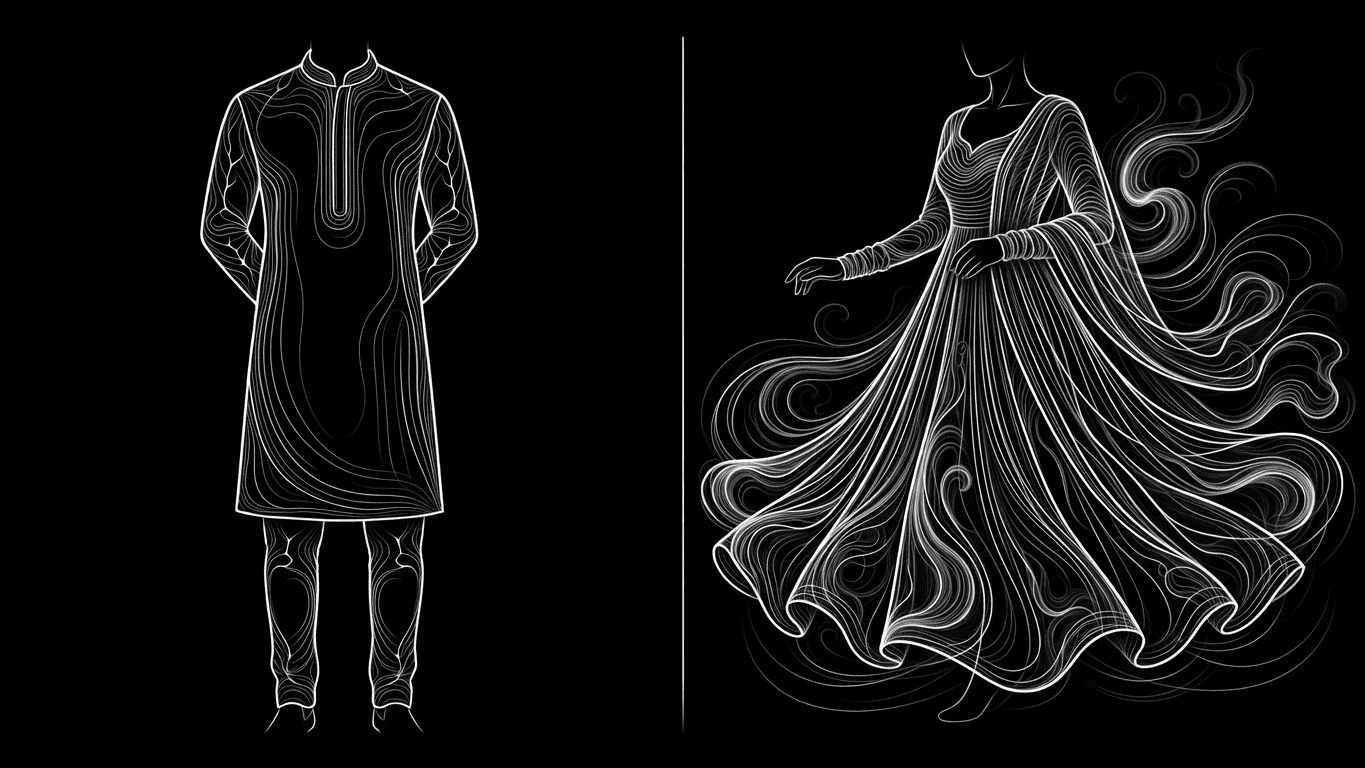
Are kurta sets or dresses better for modern ethnic style
Are kurta sets or dresses better for modern ethnic style
The question comes up every time you're standing in front of your wardrobe trying to figure out what actually works for your life. Kurta set or ethnic dress? Both look good in the thumbnail. But which one actually delivers for modern ethnic style, the kind that moves between college, brunch, work, and a festive evening without missing a beat?
Here's the real answer: it depends on what you want from your outfit. But there's a lot more nuance worth unpacking.
The case for kurta sets in modern ethnic dressing
Kurta sets have quietly become the backbone of everyday fusion wear in India. A kurta paired with straight pants, palazzo, or salwar gives you built-in versatility that a dress simply cannot. You can mix the top with jeans. You can swap the bottoms. You can layer. A dress is one unit; a kurta set is a system.
According to Neudis, searches for "ethnic co-ord sets" increased by 74%, which tells you exactly where consumer interest is heading. Women want coordinated looks that feel intentional, not assembled. Kurta sets deliver that without asking you to overthink it.
The comfort argument is also real. Rangaari reports that 90% of Indian consumers prefer cotton-rich fabrics for garments, and kurta sets, particularly those in cotton blend and rayon, are built around exactly that preference. A breathable cotton kurta with matching pants is something you can wear from 9am to 9pm without regretting it.
The market data backs up the dominance of this category too. Rangaari notes that salwar kameez and shorter kurtis combined account for 51% of India's women's ethnic wear market. That's not nostalgia. That's active, ongoing demand.
The case for ethnic dresses in modern Indian fashion
Ethnic dresses, think Anarkali silhouettes, fit-and-flare cuts, and printed flared styles, have their own strengths. They're one decision. You put it on and you're done. No pairing anxiety, no wondering if the dupatta is working, no second-guessing the bottom half.
For occasions where you want drama and ease at the same time, a well-cut ethnic dress wins. A georgette Anarkali with a digital print or embroidered yoke is festive enough for a wedding function and relaxed enough for a vacation day. The silhouette does the heavy lifting.
Ethnic dresses also translate well into indo-western territory. A printed flared dress with a contemporary neckline reads as fashion-forward without being self-consciously "ethnic." It sits in that sweet spot where Indian design sensibility meets a modern western silhouette, which is exactly where Gen Z style is living right now.
What the market tells us about where style is heading
The ethnic wear category as a whole is growing fast. According to Accio, the ethnic wear market was valued at $94.46 billion in 2024 and is projected to reach $148.45 billion by 2030, growing at a CAGR of 7.88%. That growth isn't being driven by one silhouette. It's being driven by the fusion moment, the blending of Indian craft and contemporary cuts that both kurta sets and ethnic dresses participate in.
Neudis also reports that ethnic wear accounts for 32% of all women's apparel sales. That's a huge share of a category that includes everything from fast fashion to luxury. Modern ethnic style isn't a niche. It's the mainstream.
Kurta sets vs. ethnic dresses: a practical breakdown
Versatility: Kurta sets win. The separates give you more outfit combinations per purchase.
Occasion dressing: Ethnic dresses win. One piece, complete look, less effort for events.
Everyday wear: Kurta sets win. Comfortable fabrics, easy movement, mix-and-match potential.
Style impact: Tie. A sharp Anarkali dress and a well-fitted kurta co-ord set both make a statement. It comes down to cut and fabric, not category.
Fusion potential: Both work, but kurta sets edge ahead because the top can be styled with western bottoms. A kurta over straight-cut jeans or wide-leg trousers is one of the cleanest indo-western looks going.
How Youthnic approaches this
Youthnic is an Indian fashion brand for young women that blends contemporary western silhouettes with Indian-inspired design — think co-ord sets, fusion kurtas, and indo-western pieces priced accessibly for Gen Z. The brand's approach is to not force a choice between kurta sets and dresses, but to design both with the same modern sensibility: clean cuts, wearable fabrics, and Indian craft details that feel current rather than ceremonial.
The Youthnic catalog includes kurta sets starting at INR 699 in cotton blend and rayon, alongside Anarkali dresses and printed flared styles that sit comfortably in the indo-western space. The price point matters here. Accessible fusion wear means you can actually build a wardrobe around it, not just buy one piece for a special occasion.
So which is better?
Neither is objectively better. They solve different problems.
If you want maximum wear per piece, mix-and-match flexibility, and everyday comfort: go for a kurta set. If you want a complete, high-impact look with zero assembly required: an ethnic dress is your answer.
The smartest wardrobe has both. A couple of well-chosen kurta sets for daily rotation and one or two ethnic dresses for occasions. That's modern ethnic style done practically.
Frequently asked questions
Are kurta sets considered modern ethnic wear? Yes. Kurta sets, especially those in contemporary cuts with minimal embellishment, are firmly in the modern ethnic and indo-western category. Paired with straight pants or styled with western separates, they read as current and fashion-forward.
Can ethnic dresses be worn for everyday occasions? Absolutely. Lighter fabrics like georgette and rayon in relaxed Anarkali or A-line cuts work well for college, casual outings, and low-key festive events. It depends on the cut and print rather than the silhouette category.
What makes an outfit count as indo-western fusion? Indo-western fusion typically combines Indian craft elements (embroidery, block prints, Chikankari, bandhani) with contemporary western silhouettes (co-ords, fit-and-flare, high-low cuts). Both kurta sets and ethnic dresses can qualify.
Where does Youthnic sit in this space? Youthnic designs indo-western fusion wear for urban Gen Z women aged 18 to 27. The catalog covers both kurta sets and ethnic dresses, with a focus on wearable everyday fusion at accessible price points. Browse the full range at youthnic.com.
Which fabric is best for modern ethnic wear? Cotton blend and rayon are the most popular for everyday wear. Georgette works well for dressier occasions. Both fabrics appear across kurta sets and ethnic dresses in the contemporary Indian fashion market.
If you want to start building that wardrobe, the Orange Cotton Blend A-Line Floral Print Co-ord Set is a solid everyday kurta co-ord that pairs easily with both ethnic and western styling. For the dress side of the equation, the Mustard Georgette Embroidered Anarkali Dress delivers that one-and-done festive look without the fuss. And if you want something that sits right in the indo-western sweet spot, the Black Rayon Fit & Flare Digital Print Dress brings contemporary print energy to a traditional silhouette.
Explore more from Youthnic at Youthnic